

Thinking about investing in a Hawaii timeshare?
It sounds appealing — guaranteed time in paradise every year, resort amenities, and no need to search for accommodation each trip.
But timeshares are a significant financial commitment, and they’re not right for everyone.
This guide breaks down exactly how Hawaii timeshares work, what they actually cost, and how they compare to the alternative most travelers end up preferring: vacation rentals.
What Is a Timeshare?
A timeshare is a shared ownership arrangement for a vacation property.
Instead of owning a unit year-round, you purchase the right to use it for a set period — typically one week per year, or a certain number of points you can redeem across a portfolio of properties.
In Hawaii, the most common timeshare brands are Hilton Grand Vacations, Marriott Vacation Club, and Disney Vacation Club (Aulani).
Most operate on either a fixed week system (same unit, same week every year) or a points-based system (more flexible booking across multiple properties).

The Real Cost of a Hawaii Timeshare
The upfront purchase price is only part of the cost. Before committing, it’s worth understanding the full financial picture:
Upfront purchase price:
Typically $10,000–$50,000+ depending on the brand, location, and season. Resale timeshares are often available for significantly less — sometimes as low as $1 — but come with the same ongoing fees.
Annual maintenance fees:
$1,000–$2,500+ per year, regardless of whether you use the property. These fees typically increase over time and cannot be avoided.
Special assessments:
Occasional additional charges for major repairs or renovations to the property, which owners are required to pay.
Financing costs:
Many buyers finance their timeshare at interest rates significantly higher than a standard mortgage — sometimes 14–20%.
Over a 10-year period, a timeshare that initially costs $20,000 with $1,500/year in maintenance fees represents a total outlay of $35,000 before any financing costs.
That’s the baseline comparison to make against booking vacation rentals or hotels year after year.
Pros of Hawaii Timeshares
Consistent resort access:
You get guaranteed use of a quality resort property — often with full kitchen, in-unit laundry, resort pools, and amenities that match or exceed what you’d find in a hotel.
Motivation to travel:
For some owners, the annual obligation creates a reason to actually take the trip. Without it, it’s easy to let another year go by without making it to Hawaii.
Points flexibility:
Points-based systems allow you to book different properties within the same network, giving you more variety than a fixed-week arrangement.
Long-term predictability:
If you visit Hawaii every year at the same time and value knowing exactly where you’ll be staying, a timeshare removes the annual search and booking process.
Cons of Hawaii Timeshares
High total cost:
When you factor in purchase price, maintenance fees, and financing, the cost per night of a timeshare often exceeds what you’d pay booking a comparable vacation rental or hotel outright.
Limited flexibility:
A fixed week means you’re locked into the same time every year. Even points-based systems have blackout dates, availability restrictions, and peak-season limitations.
Difficult to resell:
The resale market for timeshares is notoriously weak. Most owners who try to sell receive far less than they paid — sometimes nothing. Exiting a timeshare can be legally complex and expensive.
Ongoing fees regardless of use:
Maintenance fees continue whether you use the property or not. Life changes — illness, financial shifts, family circumstances — don’t pause the fees.
Who Are Timeshares Best For?
A timeshare makes the most sense if you visit Hawaii every year at exactly the same time, you want consistent resort-quality accommodation without rebooking each year, you’ve done the full cost analysis (including fees over 10+ years) and it genuinely works out financially, and you’ve read the contract carefully and understand the exit process before signing.
For most travelers — especially those who visit Hawaii every few years rather than annually, or who want flexibility in when and where they stay — the numbers rarely work in favor of a timeshare.
Vacation Rentals: A More Flexible Alternative
If what appeals to you about a timeshare is the space, the kitchen, and the resort-quality amenities — a vacation rental delivers all of that without the long-term commitment.
With a vacation rental, you pay only when you travel. You can choose different properties, different areas, and different times of year. You’re not locked into a contract, and there are no annual fees.
For most Hawaii travelers, vacation rentals offer the same quality of experience as a timeshare — without the financial risk.
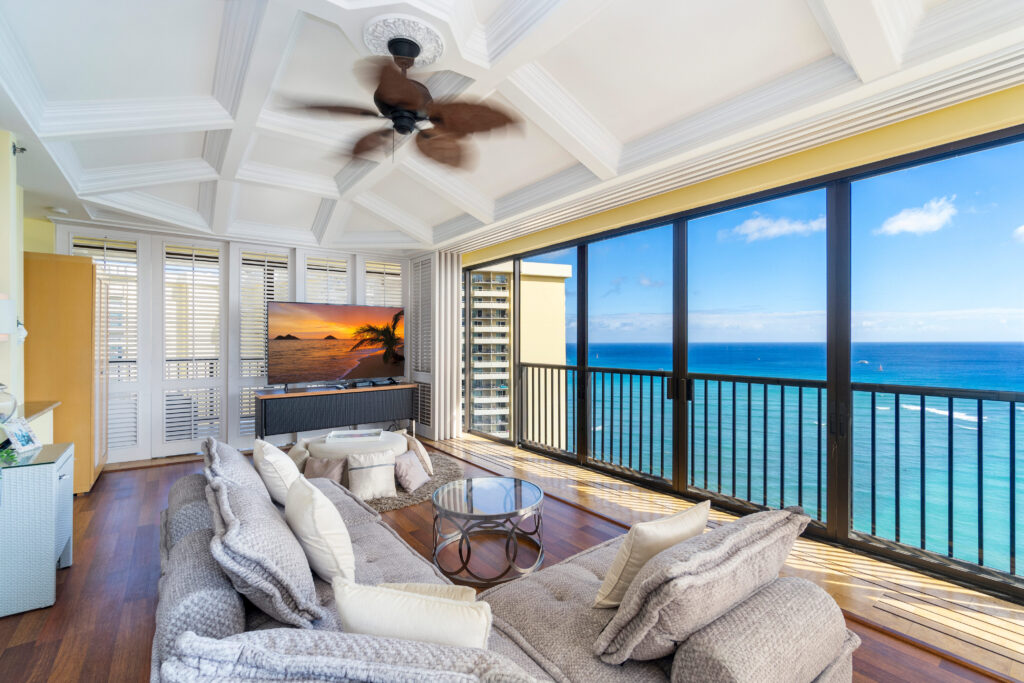
Stay with Ocean Vibe Hawaii
Our vacation rentals across Oahu are designed to give you everything you’d want from a timeshare stay — space, full kitchens, private lanais, and resort amenities — with complete flexibility.
- Waikiki Shore — beachfront condo steps from Waikiki Beach
- Waikiki Penthouse — panoramic ocean views and a two-story layout in the heart of Waikiki
- Beach Villas at Ko Olina — 2-bedroom condo with lagoon access and full resort amenities
- Ala Moana Hotel — a calm, well-connected base between Waikiki and downtown Honolulu
Frequently Asked Questions about Hawaii Timeshares
Is a timeshare in Hawaii worth it?
For most travelers, no. When you factor in the upfront purchase price, annual maintenance fees, and the difficulty of reselling, the total cost of a timeshare typically exceeds what you’d pay booking vacation rentals or hotels outright. Timeshares make the most sense for travelers who visit Hawaii every year at exactly the same time and have done a thorough long-term cost analysis before purchasing.
How much does a Hawaii timeshare cost per year?
Beyond the upfront purchase price (typically $10,000–$50,000+), timeshare owners pay annual maintenance fees of $1,000–$2,500 or more, regardless of whether they use the property. These fees typically increase over time. Special assessments for property repairs can add further costs on top.
Can you get out of a Hawaii timeshare?
It’s possible, but often difficult and expensive. Most timeshare contracts include a short rescission period (typically 5–10 days) during which you can cancel without penalty. After that, exiting a timeshare contract legally can be complex — many owners work with specialized timeshare exit attorneys. Be cautious of timeshare exit companies that charge large upfront fees.
What is the difference between a timeshare and a vacation rental?
A timeshare involves purchasing the right to use a property for a set period each year, with ongoing maintenance fees and a long-term financial commitment. A vacation rental is booked as needed — you pay only when you travel, with no ongoing fees or ownership obligations. Vacation rentals offer more flexibility, while timeshares offer consistency for travelers who return to the same destination annually.
Are Hawaii timeshare presentations worth attending?
Only if you have no intention of buying and are comfortable saying no firmly. Timeshare presentations in Hawaii often come with incentives — discounted activities, gift cards, or resort credits — in exchange for attending a 90-minute to 3-hour sales presentation. The pressure to buy can be significant. If you attend, go in with a clear decision not to purchase and an understanding of the full cost structure before the presentation begins.
What are the best alternatives to a timeshare in Hawaii?
Vacation rentals are the most direct alternative — offering the same space, kitchen, and amenity advantages of a timeshare without the financial commitment. Condo-style vacation rentals in Waikiki, Ko Olina, and Ala Moana provide resort-quality stays with full kitchens, private lanais, and shared amenities at a fraction of the long-term cost of timeshare ownership.
Still weighing your options? Read our guide to Hawaii vacation rentals vs hotels or compare areas with our Waikiki vs Ko Olina guide.
This post contains affiliate links. If you book through our links, we may earn a small commission at no extra cost to you. See our Disclosure Policy for details.