
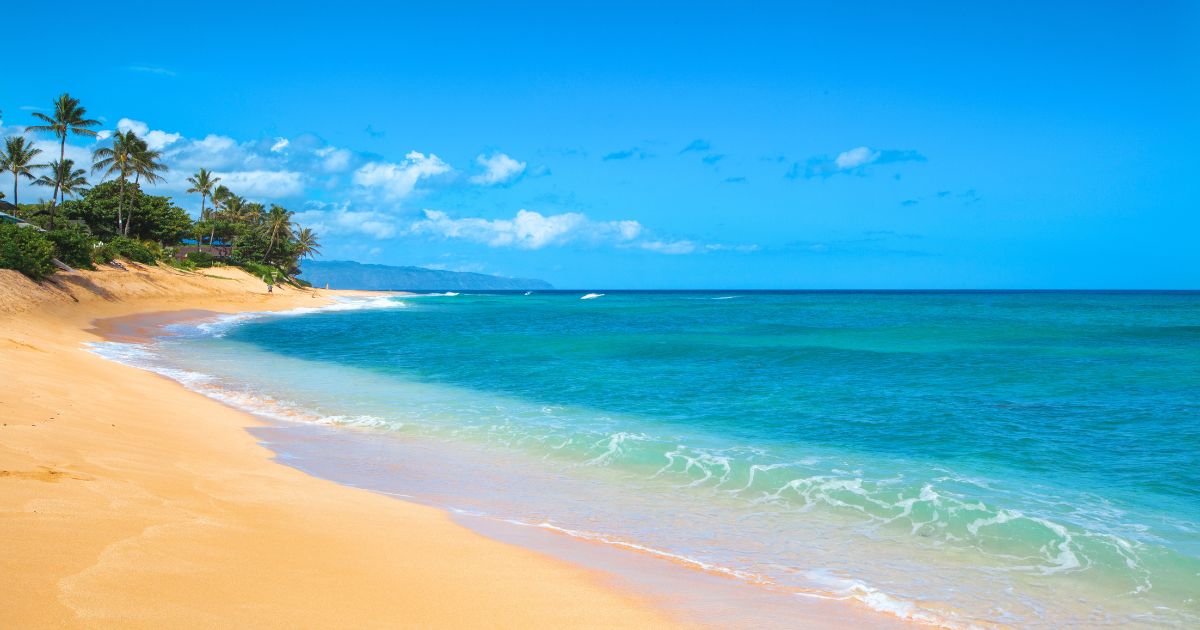
Waikiki Beach is iconic for a reason.
The view of Diamond Head from the sand, the warm, calm water, the string of hotels lining Kalakaua Avenue — it’s a version of Hawaii that lives up to its reputation.
But ask anyone who lives on Oahu where they actually go to the beach, and Waikiki rarely comes up first.
The island has over 60 miles of coastline, and some of the best stretches of sand are the ones visitors never make it to. The windward side has turquoise water and white sand that looks almost impossible.
The North Shore has some of the most powerful surf in the world.
The east side has beaches where you can park for free and walk straight to the water with almost no one around.
This guide covers the best beaches on Oahu beyond Waikiki — what makes each one worth the trip, who it’s best suited for, and what you should know before you go.
In this guide:
- Lanikai Beach
- Kailua Beach
- Sandy Beach
- Ko Olina Lagoons
- Nanakuli Beach Park
- Waimea Bay
- Ala Moana Beach Park
1. Lanikai Beach — The most beautiful beach on the island
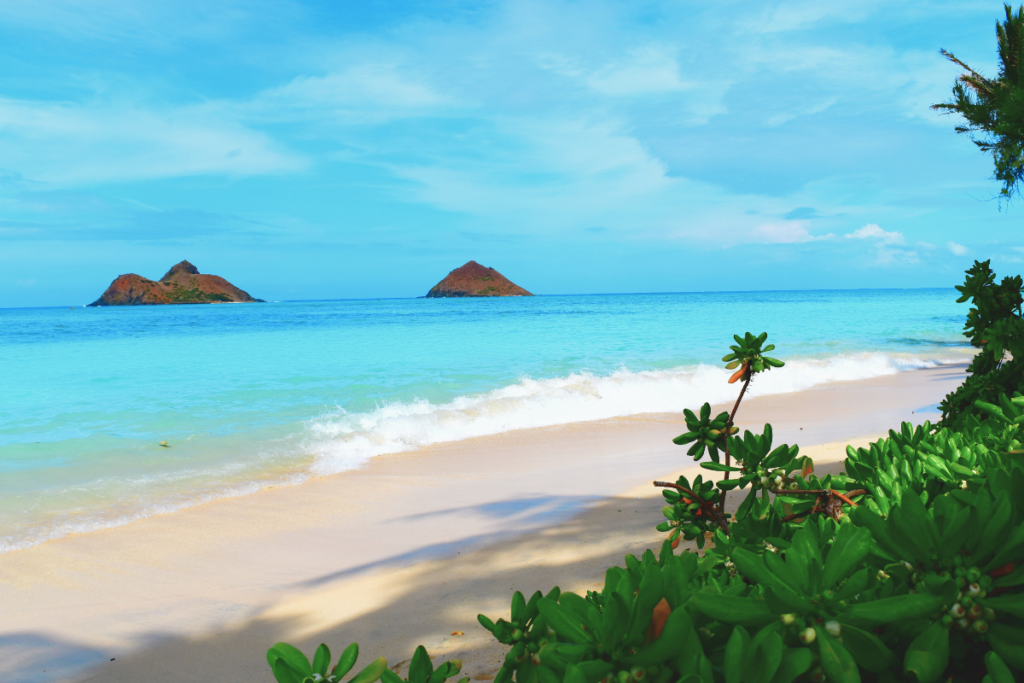
There’s a reason Lanikai consistently appears on “best beaches in the world” lists. Located on the windward side of Oahu, in the residential neighborhood of the same name just past Kailua town, Lanikai is a half-mile stretch of powdery white sand with water so clear and blue it looks filtered.
Two small islands — the Mokulua Islands, known locally as “the Mokes” — sit just offshore, and on calm mornings you can kayak or paddleboard out to them.
The water here is protected and generally calm, which makes it excellent for swimming.
One thing worth knowing: Lanikai is a residential neighborhood.
There’s no public parking lot — you park on the street, and spots fill up quickly, especially on weekends. Aim to arrive before 8am or after 2pm on weekdays. Facilities are minimal; there are no lifeguards and no concessions. Bring everything you need.
It’s also worth combining with nearby Kailua Beach, which is larger, has parking and facilities, and is just a five-minute drive away.
Locals often start at Kailua, grab coffee or breakfast in town, then walk or drive to Lanikai before the crowds arrive.
2. Kailua Beach — Wide, calm, and genuinely local
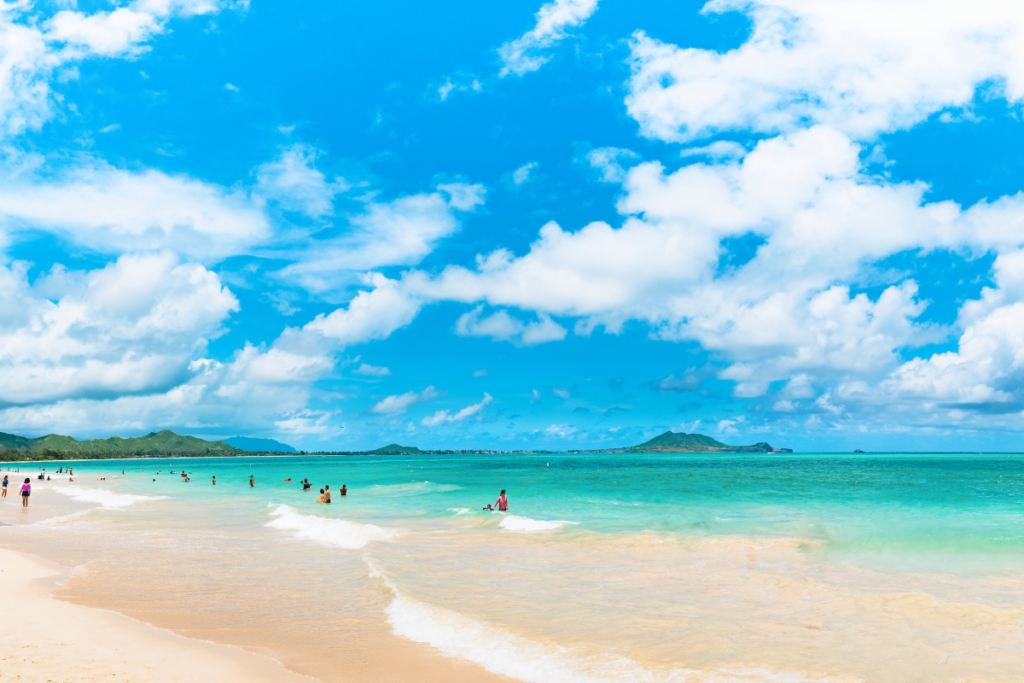
If Lanikai is the one for the Instagram moment, Kailua Beach is the one for an actual day at the beach.
At nearly two miles long, Kailua Beach is wide, relatively uncrowded (by Oahu standards), and has the kind of steady onshore breeze that makes it one of the best spots on the island for kiteboarding and windsurfing. The water is calm enough for swimming and paddleboarding, and the beach has a relaxed, local feel that’s hard to find on the tourist side of the island.
There’s a public parking lot (arrive early on weekends), restrooms, and a handful of cafes and food spots a short walk away in Kailua town — which is genuinely one of the more pleasant neighborhoods on Oahu for walking around, eating, and taking your time.
Kailua Beach is also one of the most dog-friendly beaches on the island.
Early mornings, you’ll see as many dogs as people.
If that’s not your scene, go mid-morning when the crowd shifts.
3. Sandy Beach — For watching, not swimming
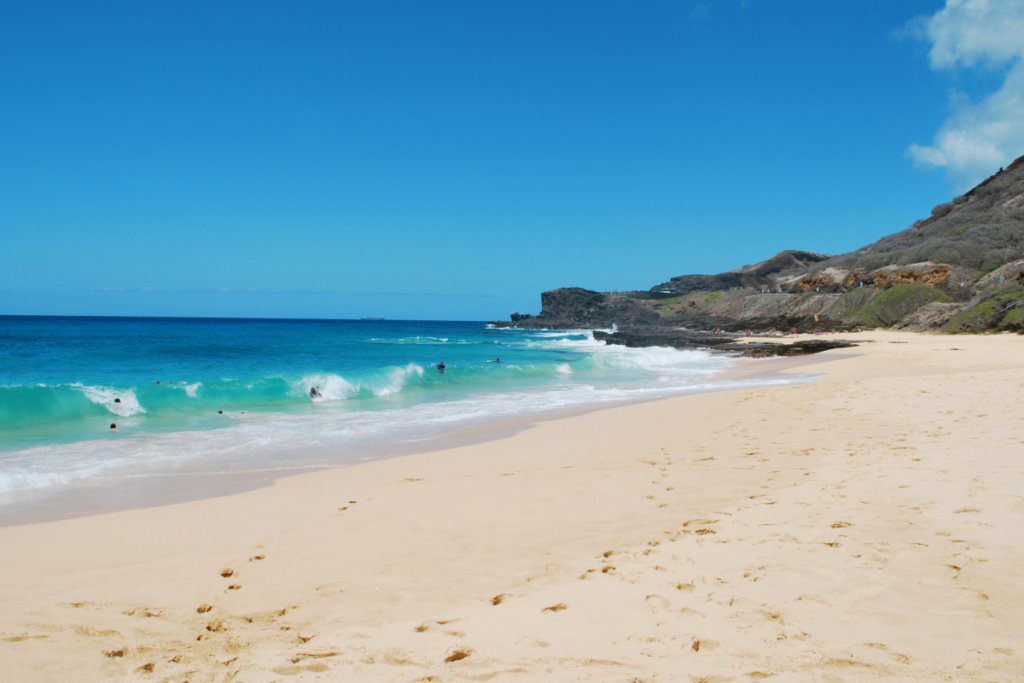
Sandy Beach is on the southeastern tip of Oahu, just past Hawaii Kai on the way to Makapu’u Point. It’s one of the most photographed beaches on the island, and one of the most dangerous to swim at.
The shore break here — waves that break directly on the sand rather than offshore — is some of the most powerful on Oahu.
Sandy Beach is consistently ranked among the most hazardous beaches in Hawaii. Every year, visitors who don’t read the warning signs end up in serious trouble.
And yet it’s absolutely worth visiting — just not for swimming.
Come to Sandy Beach to watch. Bodysurfers and skimboarders who know what they’re doing make the most of the break here, and watching them work the shore break is genuinely impressive.
The beach is wide, the views along the southeastern coastline are spectacular, and the park behind the beach is a popular local picnic spot on weekends.
The drive out here — along Kalanianaole Highway past Koko Crater and Hanauma Bay — is one of the best coastal drives on the island. Pair it with a stop at Halona Blowhole (just up the road) and Kokonuts Shave Ice in Koko Marina for a solid east side half-day.
4. Ko Olina Lagoons — The calmest water on Oahu
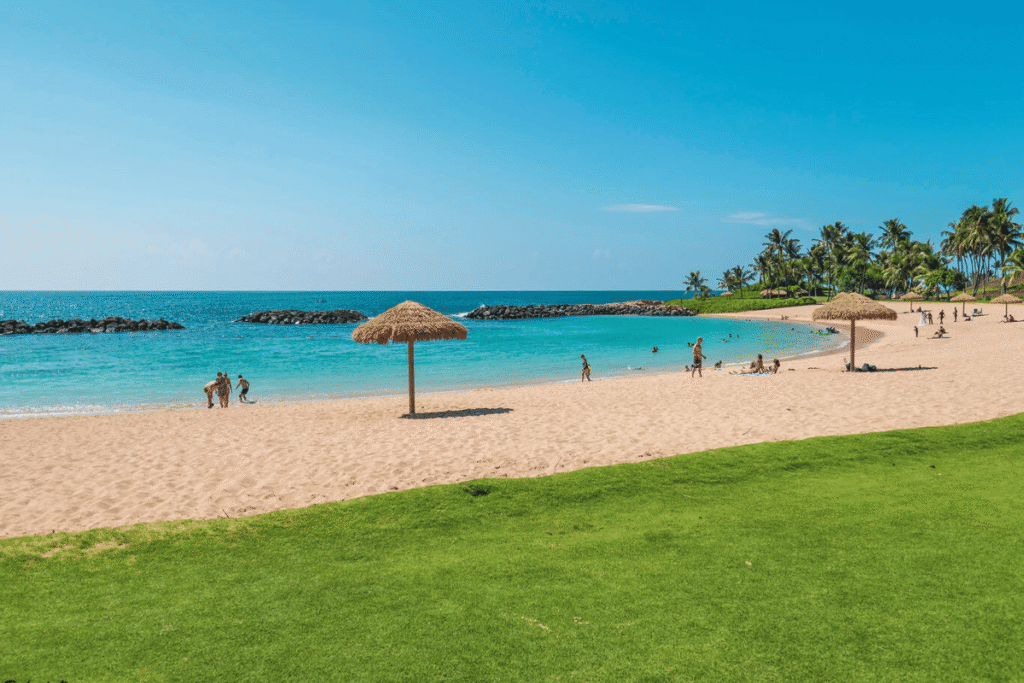
Ko Olina’s four man-made lagoons on Oahu’s west shore offer something genuinely rare: guaranteed calm water, every day of the year.
The lagoons were built into the natural lava coastline and are protected from open-ocean swells by rock jetties.
The result is flat, clear, warm water that’s safe for young children, non-swimmers, and anyone who wants to float without worrying about waves. Each lagoon has white sand, paved paths, restrooms, and outdoor showers.
Lagoon 3 and Lagoon 4 (the westernmost) tend to be slightly less crowded and have better shade in the afternoon. Lagoon 1, closest to the entrance, fills up fastest with resort guests.
The sunsets at Ko Olina are among the best on Oahu.
The west-facing coastline and wide open horizon make for extended golden hour light, and the area is noticeably quieter and more spacious than Waikiki at any time of day.
Get out on the water
The lagoons are beautiful from the shore — but the water activities here are worth making time for too.
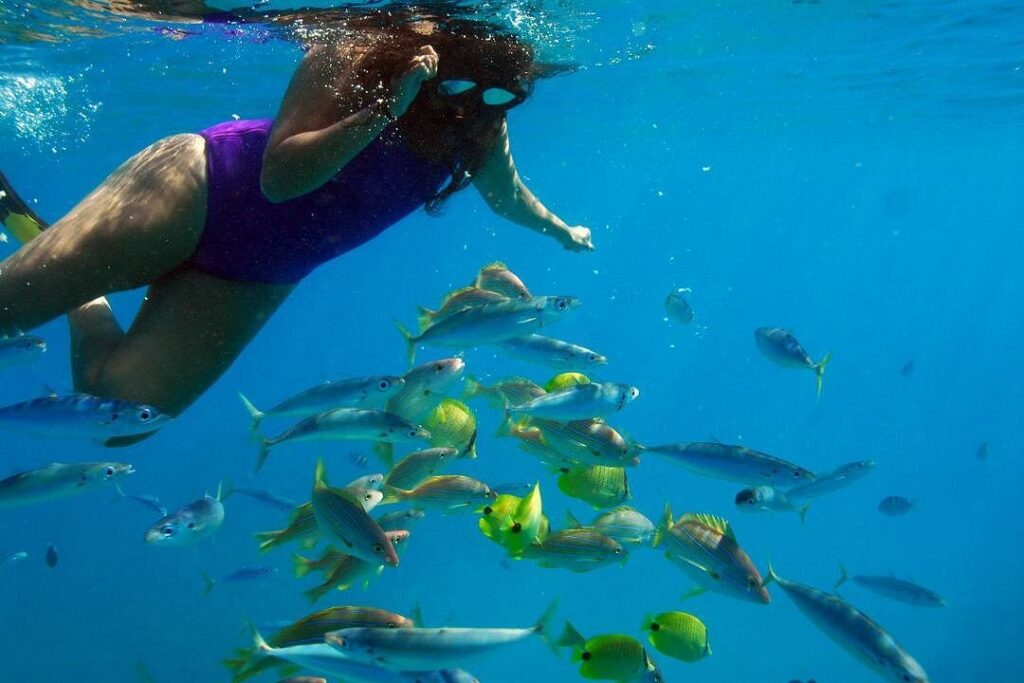
Ko Olina Glass Bottom Sunset Tour – West Oahu Reef
A glass-bottom boat tour that combines reef viewing with Ko Olina’s legendary sunsets. One of the most memorable ways to spend an evening here.
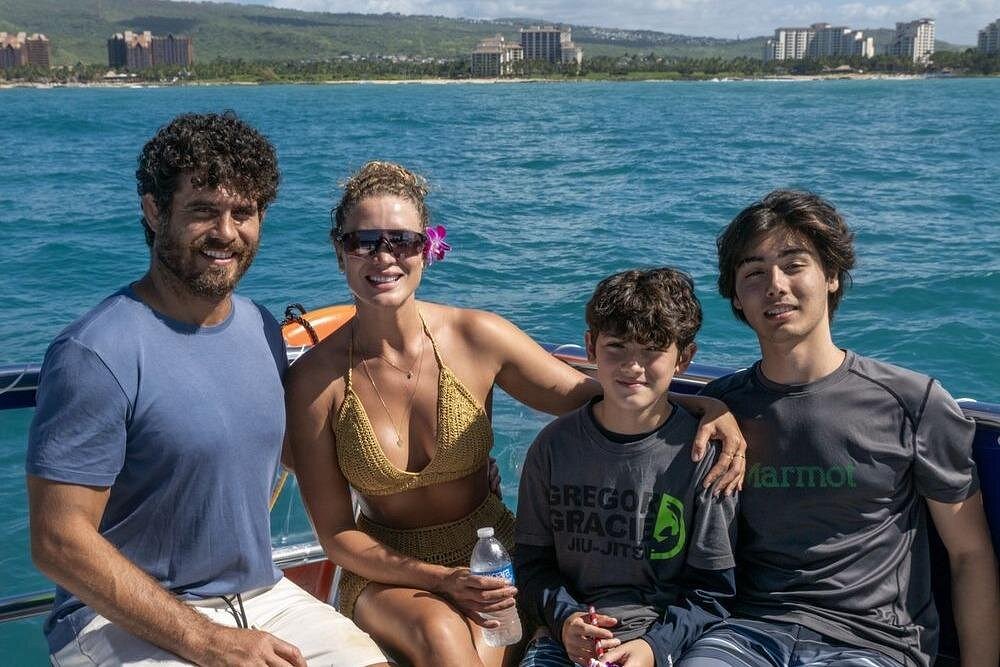
Ko Olina Catamaran Sail and Snorkel with Lunch
A full catamaran experience with snorkeling and lunch included — great for a half-day on the water. The calm conditions off Ko Olina make this accessible for all skill levels.
If you’re staying at Beach Villas at Ko Olina, you’re steps from the lagoons and can time your beach visits without the parking rush. Staying in Waikiki?
The drive takes about 35–40 minutes and is worth it for at least one afternoon.
For a full picture of what to do in this area, read our Ko Olina Travel Guide.
5. Nanakuli Beach Park — Where the west side actually lives
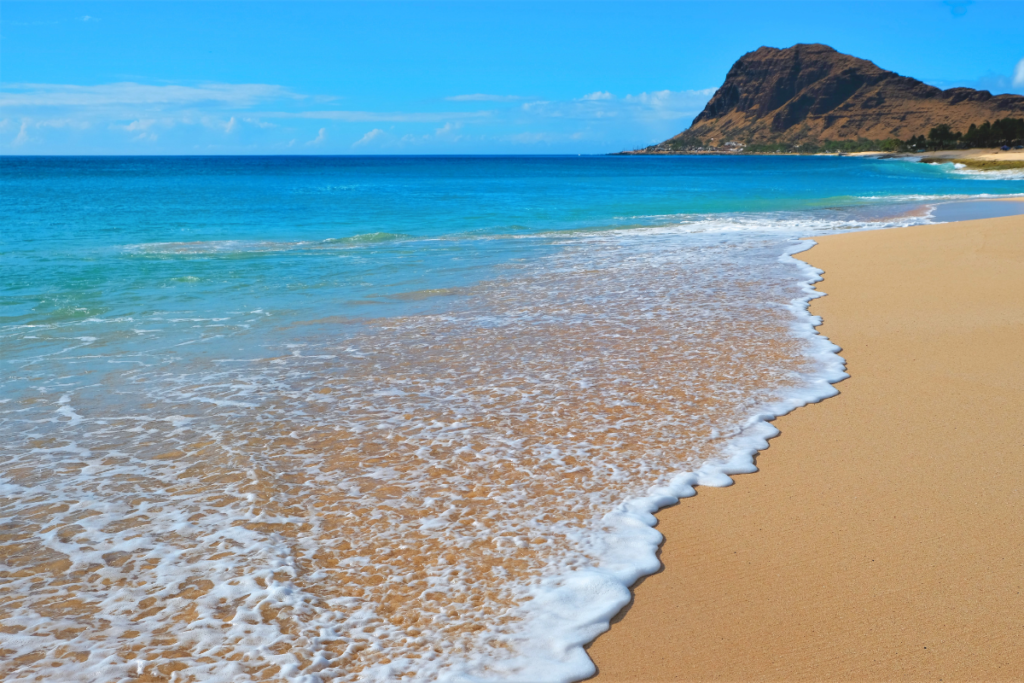
Most visitors drive straight past Nanakuli on the way to Ko Olina or the North Shore.
That’s a shame, because Nanakuli Beach Park is exactly the kind of place that makes you feel like you’re seeing a version of Hawaii that wasn’t designed for tourists.
Located on Oahu’s leeward (west) coast about 30 miles from Honolulu, Nanakuli is a working community — a tight-knit town with deep Hawaiian roots, where the beach park functions as a genuine neighborhood gathering place.
On weekends, you’ll find local families barbecuing in the picnic areas, kids cliff jumping from the limestone points at either end of the beach, outrigger canoe paddlers launching from the shore, and dogs running loose across 40 acres of open park.
It’s the kind of scene that happens when a beach hasn’t been packaged for visitors.
The name “Nanakuli” translates loosely to “pretend to be deaf” — a reference to ancient Hawaiian custom. The leeward coast was historically too dry to grow food, and locals felt ashamed they couldn’t offer hospitality to passing travelers, so they’d hide or look away to avoid the obligation. The name stuck.
The irony is that the community today has a reputation for genuine warmth toward respectful visitors — just don’t come in with a tourist attitude.
The beach itself is wide and sandy, tucked between two limestone points.
In summer, the water is generally calm and swimmable. In winter, the shorebreak and currents can be strong — similar to Sandy Beach, it’s not a place to underestimate the ocean.
The park has restrooms, showers, picnic areas, and ample parking. Lifeguards are present at times, but not always — check before you go in.
One honest note: the Waianae coast, which includes Nanakuli, is one of the less affluent areas of Oahu.
You may see signs of that in the parking lot. Go with the right mindset — come to enjoy the beach and the community, not to gawk — and you’ll be fine. Locals here respond well to people who show basic respect.
If you’re already driving out to Ko Olina, Nanakuli is less than 10 minutes further up Farrington Highway.
It’s worth the extra miles.
6. Waimea Bay — North Shore’s most dramatic beach
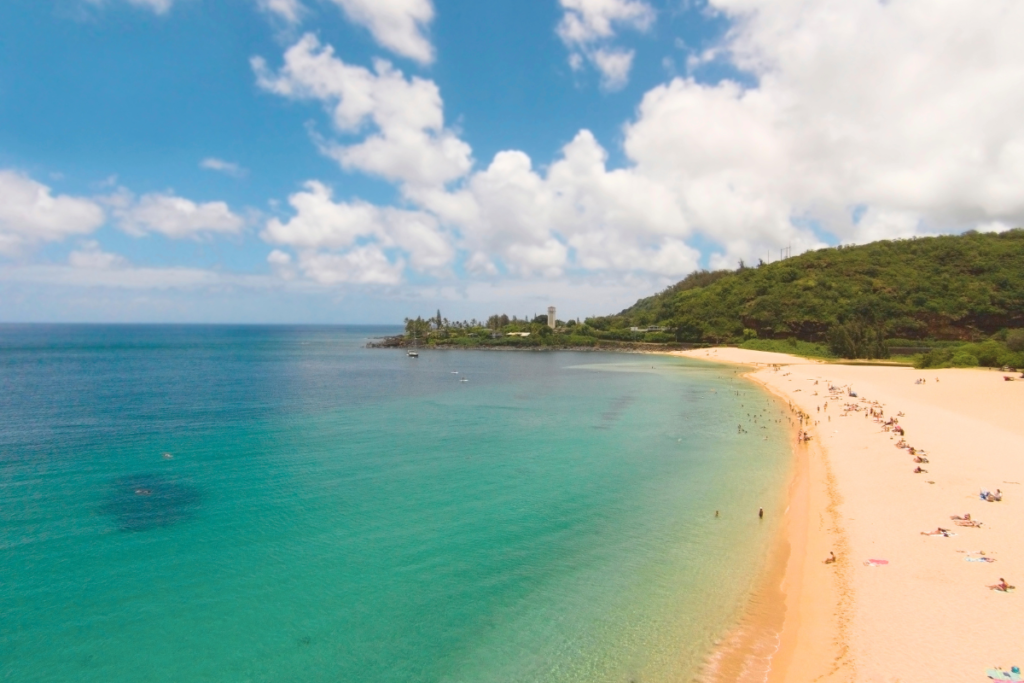
On the North Shore, Waimea Bay is the one that stops you in your tracks.
In summer (roughly May through September), Waimea Bay is calm, clear, and one of the best swimming beaches on the island.
Locals jump from the famous rock on the right side of the bay — a rite of passage that looks more intimidating than it actually is. Snorkeling near the rocks is excellent when visibility is good.
In winter (November through February or March), Waimea Bay transforms entirely.
Waves can reach 20 to 30 feet during large swells, and it becomes one of the most famous big-wave surf spots in the world.
The Eddie Aikau Invitational — one of surfing’s most legendary competitions — is held here, but only when waves reach a minimum of 20 feet.
Swimming is strictly off-limits during winter swells; the beach is still worth visiting just to watch.
The drive to Waimea from Waikiki takes about 45–50 minutes on the H-2 Freeway and Kamehameha Highway. The road along the North Shore is one of the most scenic on the island, and you’ll pass Haleiwa town — worth a stop for shave ice, plate lunch, and a walk around — on the way.
7. Ala Moana Beach Park — The local beach hiding in plain sight
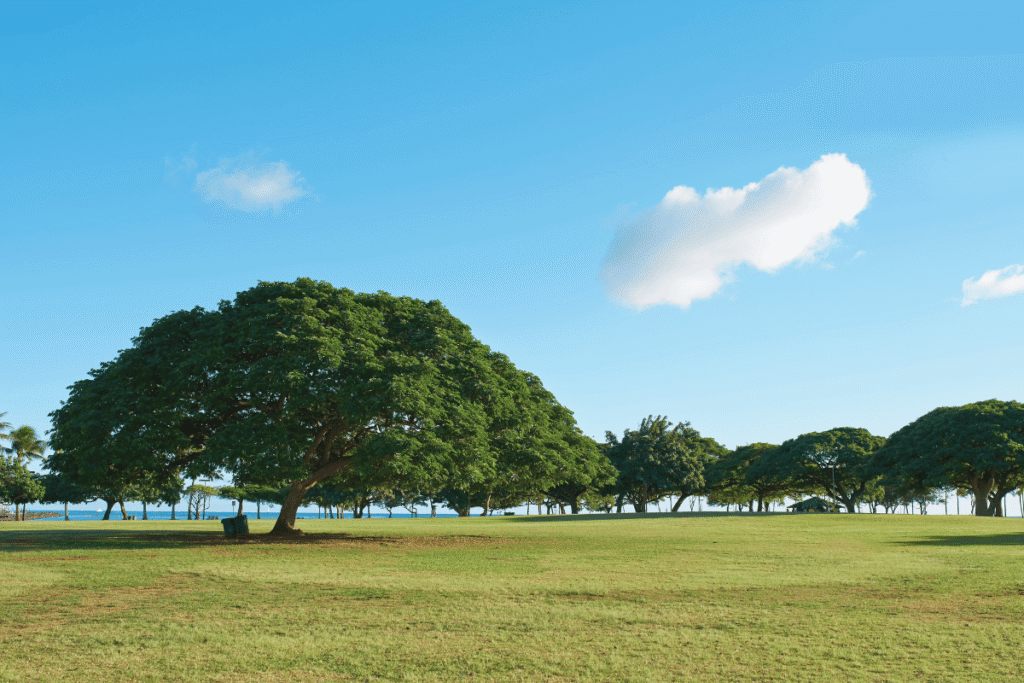
Most visitors walk past Ala Moana Beach Park every day without stopping, on their way to or from Ala Moana Center. That’s a mistake.
Located directly across from the shopping center, Ala Moana Beach Park is where Honolulu residents actually go to the beach.
It’s a 76-acre park with a long stretch of sand, calm protected water, wide grassy areas, volleyball courts, and one of the most consistently pleasant swimming beaches on the south shore.
The water here is calmer than Waikiki and much less crowded.
In the late afternoon, the park fills with local families, joggers, and outrigger canoe paddlers heading out for their evening session.
It’s a genuine slice of local Honolulu life that almost no visitors see.
If you’re staying at Ala Moana Hotel, the beach is a short walk away — no car required.
Tips for visiting the best beaches on Oahu
North Shore beaches are seasonal.
What’s a calm, swimmable beach in summer can be life-threatening in winter.
This applies to Waimea Bay, Sunset Beach, Pipeline, and most beaches along the North Shore.
Always read the posted warning signs and check ocean conditions before entering the water — any time of year.
Parking fills fast on weekends.
Lanikai, Kailua, and the Ko Olina lagoons all have limited parking that can fill completely by mid-morning on weekends. Arrive early, or plan your visit for a weekday.
Most beaches have no lifeguards.
Waikiki and a small number of other beaches have lifeguard coverage.
Many of the best beaches on this list — including Lanikai and Waimea Bay (outside competition days) — do not.
Know your swimming ability, check conditions, and never go alone.
Rental cars open up the island.
The windward side, North Shore, and east coast are largely inaccessible by public transit from Waikiki.
If you want to see more than the south shore, a rental car for at least a day or two is worth it.
Looking for a place to stay on Oahu?
Browse Waikiki Stays →
Browse Ala Moana Stays →
Browse Ko Olina Stays →
Frequently Asked Questions about Oahu Beaches
What is the best beach on Oahu?
It depends on what you’re looking for. For sheer beauty and calm water, Lanikai Beach on the windward side is hard to beat. For families with young children, the Ko Olina Lagoons offer guaranteed calm water in a comfortable setting. For a true local experience close to Waikiki, Ala Moana Beach Park is consistently overlooked by visitors and worth making time for.
Is Waikiki Beach good for swimming?
Yes — Waikiki is generally safe for swimming year-round, with calm conditions, lifeguard coverage, and easy beach access. It’s one of the more reliably swimmable beaches on the south shore. That said, conditions can change, and it’s always worth checking the ocean warning flags posted near the water.
What beaches in Oahu are best for families with kids?
The Ko Olina Lagoons are the most family-friendly option on the island — the water is calm, protected, and shallow, with restrooms and paved paths. Kailua Beach is another strong choice for families: wide sand, gentle surf, and facilities within walking distance of a good town for food. Avoid Sandy Beach and the North Shore beaches in winter if you’re traveling with young children.
How far is Lanikai Beach from Waikiki?
Lanikai is about 25–30 minutes from Waikiki by car, on the windward side of the island. There’s no convenient public transit option — a rental car is the practical way to get there. The drive itself is scenic, taking you over the Pali Highway and down through the Ko’olaupoko district.
Can you swim at Sandy Beach on Oahu?
Sandy Beach is one of the most dangerous beaches on Oahu and is not recommended for swimming unless you’re an experienced bodysurfer who understands the conditions. The shore break is fast and powerful, and injuries are common among visitors who underestimate it. The beach is absolutely worth visiting for the scenery and the watching — just stay out of the water.
What is the difference between the Ko Olina lagoons and regular beaches?
The Ko Olina lagoons are man-made coves built into the natural lava coastline, specifically designed to provide calm, protected swimming. Unlike natural beaches where wave conditions can vary daily, the lagoons are almost always flat and safe. They’re not as wild or natural-looking as Lanikai or Waimea Bay, but for families with young children or anyone who wants to swim without worrying about surf, they’re the most reliable option on the island.
Is Nanakuli Beach safe for visitors?
Nanakuli Beach Park is a public beach and genuinely welcoming to visitors who come with the right attitude. The Waianae coast has a reputation for being rough on people who show up disrespectfully — but locals respond well to basic courtesy. Park, say hello, mind your own space, and don’t treat the community like a backdrop for photos. In summer, the water is calm and swimmable. In winter, the shorebreak can be strong — check conditions before entering. The park has lifeguard coverage at certain times, but not always.
Do you need a car to reach the best beaches on Oahu?
For most beaches on this list — yes. Ala Moana Beach Park is walkable from the Ala Moana neighborhood, and Waikiki Beach is walkable from Waikiki hotels. But Lanikai, Kailua, Sandy Beach, Ko Olina, and Waimea Bay all require a car. Renting a car for at least one day of your trip is one of the best decisions you can make for exploring Oahu beyond the tourist corridor.
Planning where to stay on Oahu? Read our guide to Waikiki vs Ko Olina to find the area that fits your trip. Or explore our stays in Waikiki, Ala Moana, and Ko Olina.
This post contains affiliate links. If you book through our links, we may earn a small commission at no extra cost to you. See our Disclosure Policy for details.